


Coveo is a strong platform for commerce and workplace search. Few tools match it there. Buyers with a narrower job have more options.
If visitors need accurate answers on public website and docs content, SiteGPT and kapa.ai provide them without a suite. Algolia is the closest replacement if you want a results page.
Regulated buyers need to check two contracts first. A BAA (Business Associate Agreement) is a contract that HIPAA requires before a vendor handles PHI (protected health information). HIPAA is the US health privacy law.
A DPA (Data Processing Agreement) is a contract that GDPR requires between a data controller and a processor. GDPR is the EU privacy law.
Coveo signs a BAA and runs a separate HIPAA platform. SiteGPT offers a BAA on the Enterprise plan only and executes its DPA for Enterprise customers. Public content rarely holds PHI. Visitors can still type PHI into any box you give them, so the BAA question still applies.
iShort answer
Pick Algolia if you want a results page with published rates. Pick SiteGPT if visitors need direct answers from public content and you want a published price, with a BAA available on Enterprise only. Pick kapa.ai for developer documentation.
Stay on Coveo for commerce search, workplace search with document-level permissions, and service search across private systems. A chat answer tool replaces none of those.
Key takeaways
| Tool | Best for | Published entry price |
|---|---|---|
| Algolia | Results page with published rates | $0 start, then usage |
| SiteGPT | Answers on public content without a suite | $39/mo billed yearly, $59 billed monthly |
| kapa.ai | Technical documentation | 14-day trial, then by request |
| AddSearch | Results page with answers beside it | $119/mo billed annually |
| Elastic | Building your own search | Usage-based |
| Lucidworks | Large commerce and B2B programs | By quote |
| Glean | Internal workplace search | By demo |
Four tests. If you answer no to the first three, a narrower tool is worth a look.
Is private content in scope?
Document-level permissions across internal systems point to a suite.
Do you merchandise?
Ranking rules, promotions, and catalog facets point to a commerce search platform.
Do many teams share it?
One platform across service, commerce, and workplace can justify suite pricing.
Do you need a BAA or DPA?
Confirm plan, scope, and what the compliant setup turns off. SiteGPT's BAA is Enterprise-only.
8% vs 15%
Google users clicked a traditional result on 8% of visits when an AI summary appeared, and on 15% of visits when none did. The study covers Google search only. It shows how often people stop at an answer.
Source: Pew Research Center, 22 July 2025, 900 US adultsWhy do buyers look for Coveo alternatives?
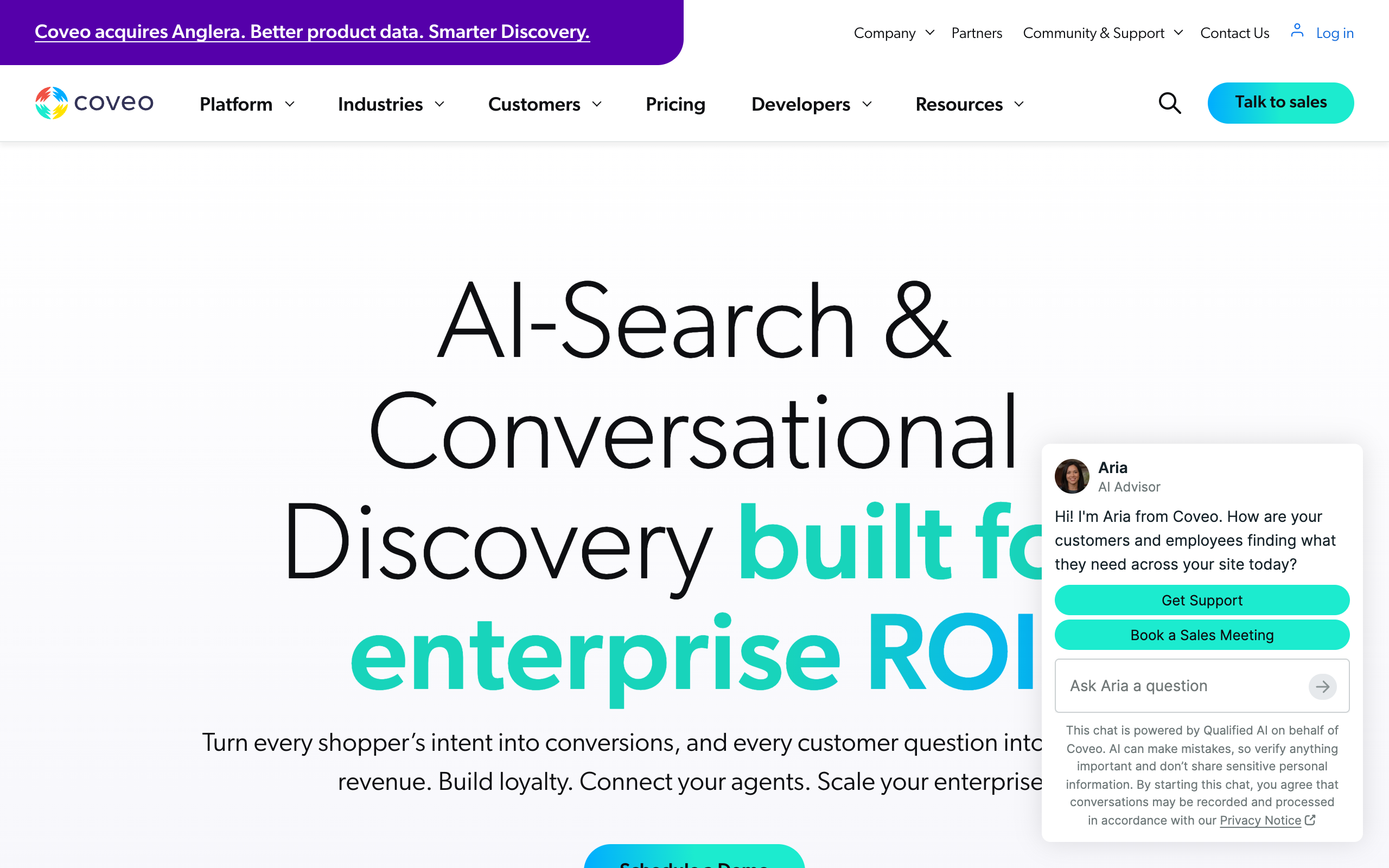
Buyers usually look elsewhere because they need less than the full platform. Four issues come up. Each one follows from what Coveo publishes.
1. The price is not public. Coveo's pricing page lists no dollar figures and says to request pricing. It sells annual or three-year subscriptions, so the first number arrives after a sales conversation.
2. Generative answers are an add-on. The same page lists Generative Answering, the Answer API, Conversational Search, and the Passage Retrieval API as add-ons for Service, Website, and Workplace. A buyer who only wants answers pays for search first, then for answers.
3. Rollouts take time. G2 shows an average time to implement of 4 months on its Coveo page. That figure is reasonable for a platform that connects many systems. It is a lot for a public docs site.
4. Tuning takes skill. Coveo's relevance models, dynamic facets, and personalization all need ongoing tuning work. A team without a search owner may use a small part of what it pays for.
When should you stay on Coveo?
Stay on Coveo if you need work a narrower tool cannot do. It holds a 4.3 G2 rating from 141 reviews and has a long record in large accounts.
- Commerce search. Coveo sells modular commerce pricing with Conversational Product Discovery as an add-on. Catalog search with merchandising is a different product from a chat answer.
- Workplace search. Document-level security, permissions, and seat-based plans suit internal search across company systems.
- Service search across private systems. Coveo's website search connects CMS, CRM, and knowledge bases into a unified index, with personalization that follows a visitor across channels.
- PHI in private content. Coveo's HIPAA platform runs on separate infrastructure with 6-year audit log retention, and Coveo passed its latest audit in 2025.
What should you look for in a Coveo alternative?
Six criteria separate these tools for an enterprise buyer. The first decides most of the list.
1. Public or private content
Public content needs no permissions model, so a much simpler tool can work. Private content needs retrieval that respects who may see each document. If any private system is in scope, narrow the list to tools that handle permissions.
2. Answer accuracy and its failure mode
Ask what the tool does when the content has no answer. SiteGPT sends a fallback message and logs the question as unanswered, and its docs call this often a good result. How to stop a chatbot hallucinating covers the checks that matter on any vendor.
3. Compliance documents and their limits
Ask for the signed document, its scope, and the features it turns off. A compliance badge on a homepage answers none of those. The HIPAA chatbot vendor questions work for search vendors too.
4. Freshness
Ask how often content is re-read and whether a removed page leaves the index. On SiteGPT those are separate features: auto-sync re-reads pages, and only a sitemap scan removes them.
5. Time to first answer
A short pilot on your own content tells you more than a demo. Tools with a self-serve trial let you run that pilot before procurement starts.
6. Total cost
Include implementation, tuning time, and LLM keys you supply yourself. A suite with a services fee and a cheap tool with an engineer attached can cost a similar amount.
What are the best Coveo alternatives?
1. Algolia: best for a results page you can price
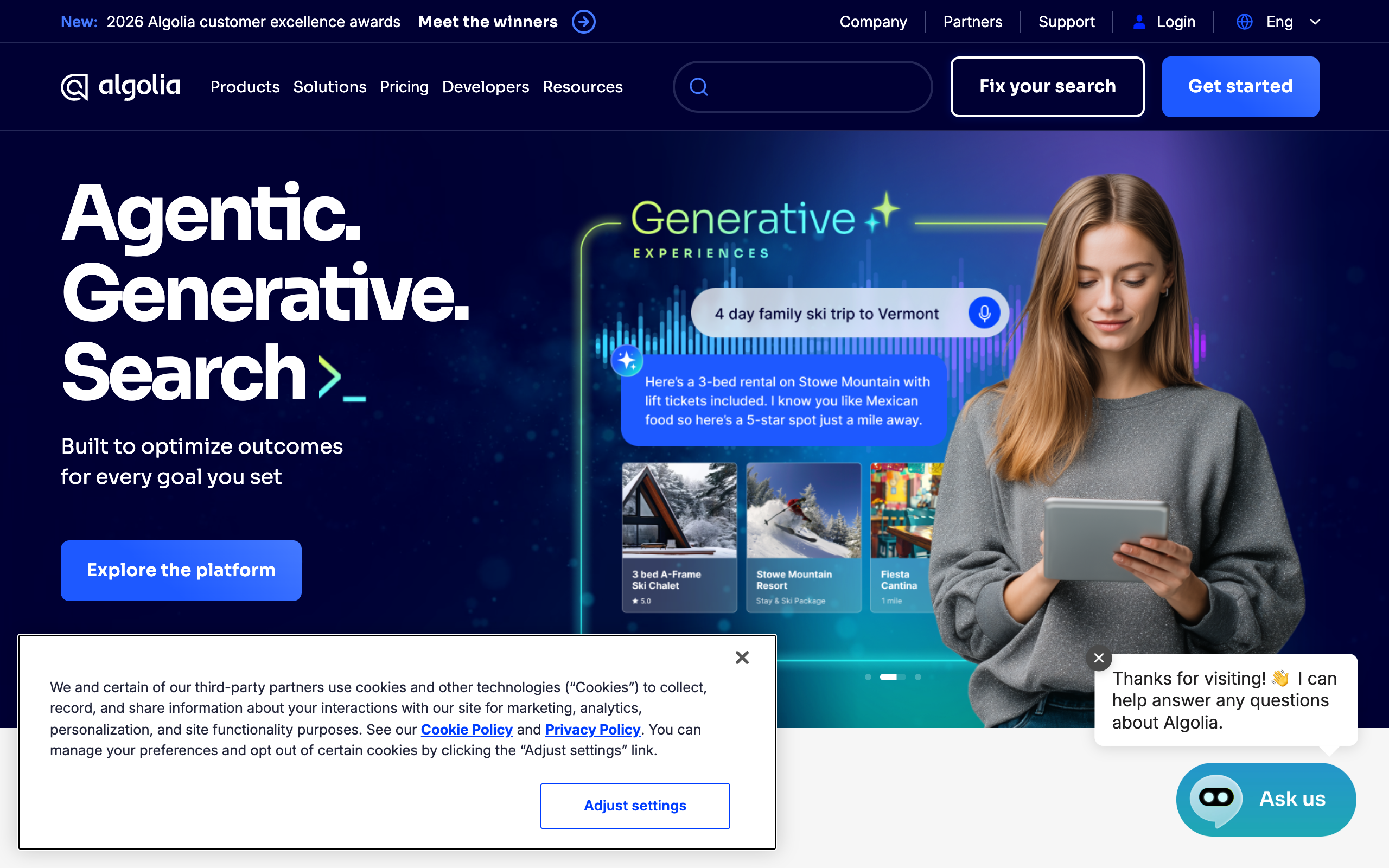
Algolia is the closest replacement if your visitors expect a ranked results page. It publishes usage rates, so you can model a budget from your own traffic. It ranks first because it is the most direct match for Coveo Website. It is also far easier to test.
Key features
- Search API with typo tolerance, filters, facets, and merchandising
- Crawler that re-indexes your site
- AI Ranking and AI Synonyms on Grow Plus
- NeuralSearch on Elevate
- Agent Studio for retrieval-grounded agents, with your own LLM
Pros
- Published rates and a free plan
- Lists GDPR, SOC 2, ISO 27001, and ISO 27017, and publishes its DPA
- Processing locations in the EU, UK, US, and more
- 4.5 on G2 from 461 reviews
Cons
- HIPAA is not listed in its product compliance article
- NeuralSearch needs a custom annual Elevate contract
- AI answers need your own LLM key, and Ask AI is not standalone for new applications
- As-you-type search raises request counts, because each keystroke sends a request
Pricing (pricing page):
| Plan | Price | Notes |
|---|---|---|
| Free | $0 | 10,000 search requests, 50,000 records |
| Grow | From $0/mo | 10,000 requests included, then $0.50 per 1,000 |
| Grow Plus | From $0/mo | 10,000 requests included, then $1.75 per 1,000, with AI features |
| Elevate | Custom annual | NeuralSearch and enterprise security features |
100,000 search requests costs $45 a month on Grow, or $157.50 on Grow Plus
Search fees only, before records and crawls. Coveo's pricing unit is also 100,000 queries a month. Use this volume for a first quote comparison.
Best forBuyers who want a results page, published rates, and a fast pilot.
The content and docs side of this decision, including open source engines, is in Algolia alternatives.
2. SiteGPT: best for accurate answers on public content without a suite
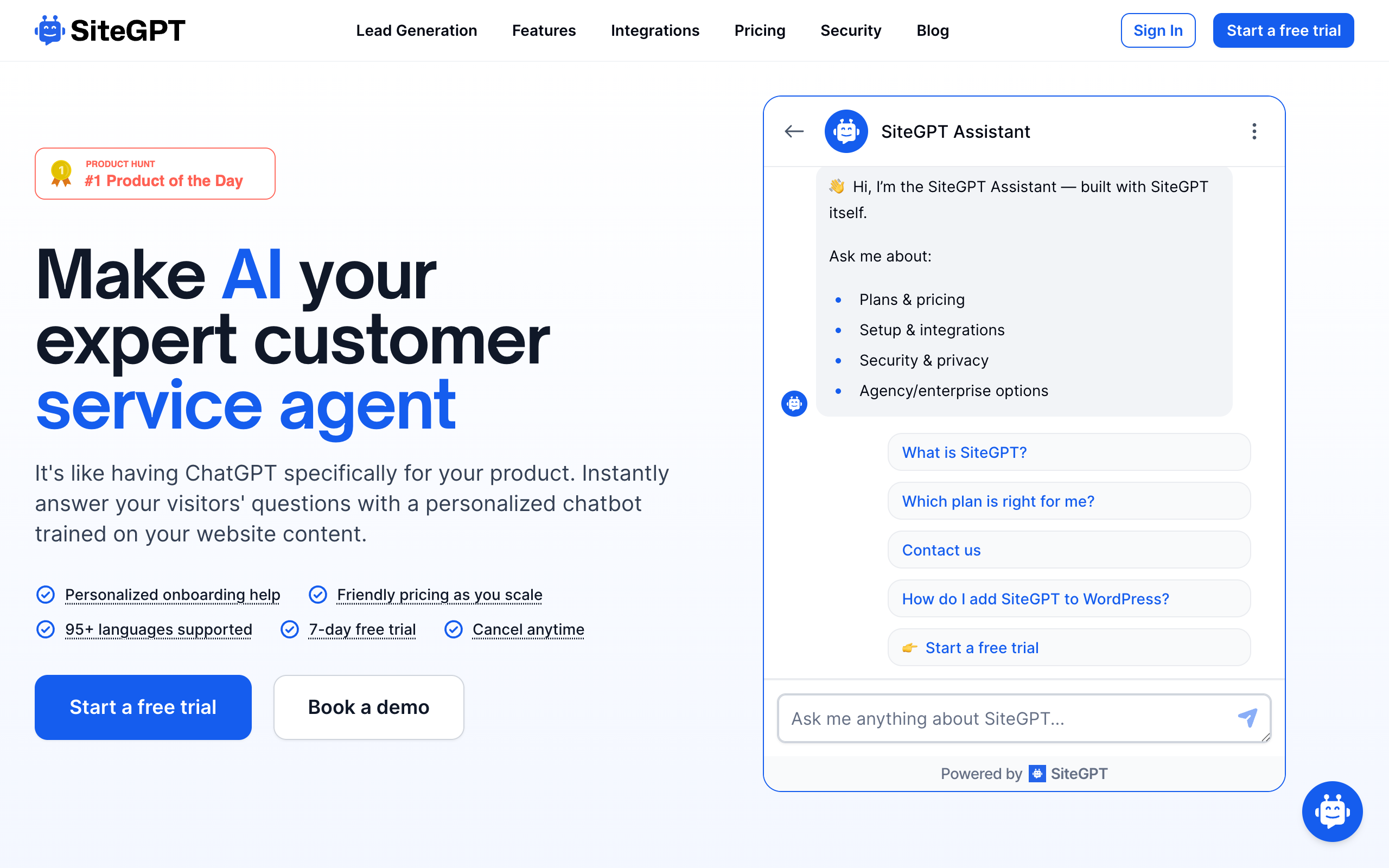
SiteGPT answers questions from your website, docs, and files in a chat window. It suits an enterprise buyer whose public content is already written and whose visitors ask questions. You can test it the same day, because the trial is self-serve.
SiteGPT answers in a chat window. It has no results page and no documented search bar widget. It takes no actions on live systems during a chat, and it has no document-level permissions.
Key features
- Trains on websites, sitemaps, files, YouTube, GitHub, and cloud drives
- Auto-sync monthly on Growth and weekly on Scale, with daily sitemap scans on Scale
- Fallback message and an unanswered-question log when content has no answer
- Human escalation, lead capture, and 95+ languages
- Widget SDK that sends a query from your existing search box into the chat
Pros
- Published pricing with a 7-day free trial (credit card required)
- No LLM key to supply
- SOC 2 Type II examined, with GDPR certified by DPLMC International
- HIPAA assessed, with a BAA on the Enterprise plan only
- Small code change to connect an existing search box
Cons
- No results page, facets, merchandising, or personalization
- No document-level permissions, so it suits public content
- BAA and signed DPA are Enterprise-only, and a HIPAA workspace blocks cloud connectors and chat integrations
- Core data storage subprocessors are in the United States, so EU-only storage is not met
- SSO is not mentioned on its security or pricing pages, so ask
Pricing (pricing page, 7-day free trial, credit card required):
| Plan | Billed monthly | Billed yearly | Limits |
|---|---|---|---|
| Starter | $59/mo | $39/mo ($468/yr) | 4,000 GPT-4.1 mini or 400 GPT-4.1 messages, 1,000 pages |
| Growth | $129/mo | $79/mo ($948/yr) | 10,000 mini or 1,000 GPT-4.1 messages, 10,000 pages |
| Scale | $429/mo | $259/mo ($3,108/yr) | 40,000 mini or 4,000 GPT-4.1 messages, 50,000 pages |
| Enterprise | Custom | Custom | Custom limits, BAA and DPA available |
Best forEnterprise teams that need accurate answers on public content and do not want to run a search suite.
The wider buying case, including when chat replaces search outright, is in enterprise site search.
3. kapa.ai: best for technical documentation
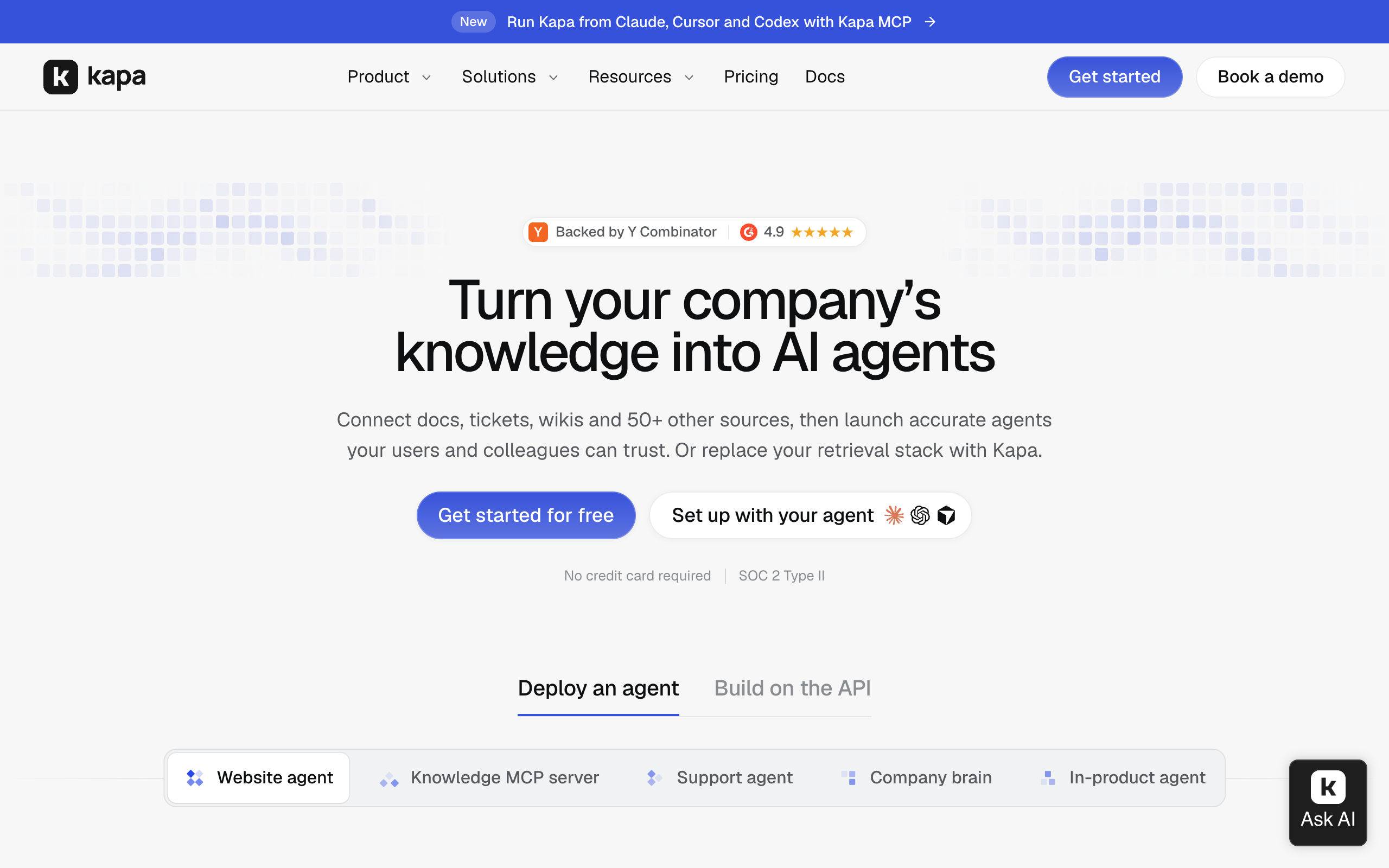
kapa.ai gives cited answers from documentation, tickets, wikis, and code. Its named customers include OpenAI, Logitech, and Nokia. It is a better fit than SiteGPT for an enterprise with a large developer audience. Its Retrieval API, MCP server, and regional hosting suit that buyer.
Key features
- Website widget added with a script tag
- Hosted MCP server and Retrieval API
- Slack, Discord, and Zendesk deployments
- SSO, SCIM, and role-based access on Enterprise
Pros
- SOC 2 Type II and GDPR listed
- Zero data retention and PII masking on Growth and above
- US or EU hosting on Enterprise
- G2 shows an average time to implement of 1 month
Cons
- Paid pricing is not published
- HIPAA is not mentioned on its pricing page
- Technical focus suits docs more than marketing sites
Pricing (pricing page):
| Plan | Price | Notes |
|---|---|---|
| Free trial | $0 for 14 days | 5,000 pages crawled, 1,000 answers |
| Growth | By request | Platform fee plus committed answers |
| Enterprise | Custom | SSO, SCIM, regional hosting |
Best forEnterprises with deep technical documentation and developers as readers.
4. AddSearch: best for a hosted results page with answers beside it
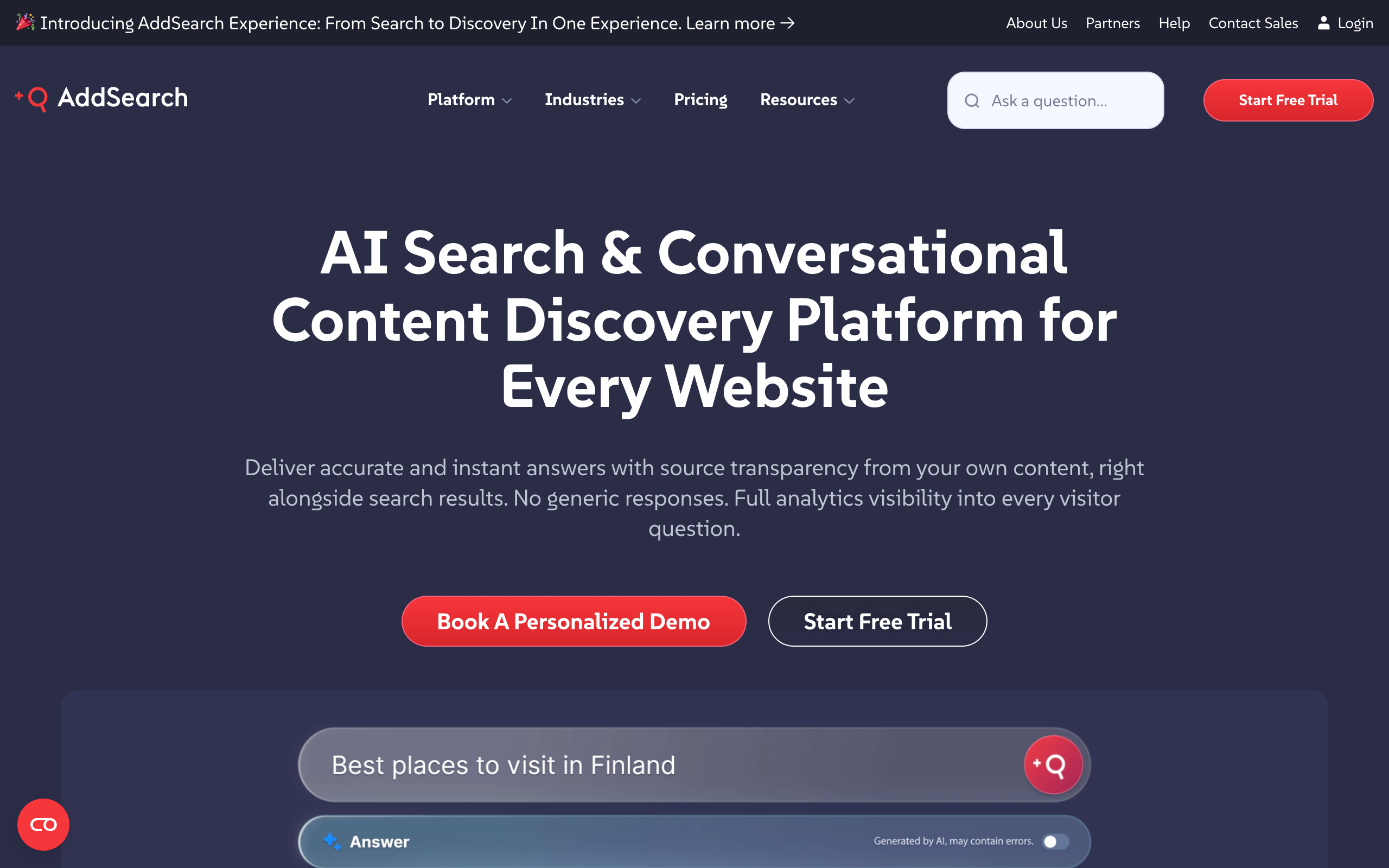
AddSearch is hosted site search for content sites. It shows answers with source links next to regular results. That matches a Coveo Website deployment, with a simpler setup. Typical implementation takes 2-4 weeks, per its pricing page.
Key features
- Keyword search with facets, synonyms, and ranking control
- AI Answers and AI Conversations with source transparency
- Merges content from several platforms into one search
- Native apps for WordPress and Shopify
Pros
- Published starting prices
- Results page and answers together
- Describes itself as GDPR-ready and says it follows SOC 2 standards
- 14-day free trial
Cons
- AI Answers starts at $700 a month billed annually
- A BAA is not mentioned on its pricing page
- AI Conversations is priced by quote
Pricing (pricing page):
| Plan | Price | Notes |
|---|---|---|
| Keyword Search | From $119/mo billed annually | Facets, ranking, synonyms |
| AI Answers | From $700/mo billed annually | Single-question answers with sources |
| AI Conversations | Custom | Context-aware follow-ups |
Best forMarketing and content teams that want a results page, answers, and a vendor to help set them up.
5. Elastic: best for building your own search
Elastic gives engineers full control. It has no turnkey site search layer. Its documentation says Enterprise Search, including App Search and Workplace Search, was discontinued in Elastic Cloud Hosted in 9.0. Replacing Coveo with Elastic means building your own search.
Key features
- Serverless, hosted, or self-managed deployment
- Vector search and Agent Builder
- Self-managed Open Crawler and connectors
Pros
- All Elastic Cloud subscription tiers on Azure, Google Cloud, and AWS permit a BAA, per its security page
- Data Processing Addendum available on request
- Deep control over relevance
Cons
- You build the interface, crawler operations, and relevance tuning
- No turnkey site search product in version 9.0
- Metered pricing takes modeling
Pricing (Serverless pricing):
| Dimension | Rate | Notes |
|---|---|---|
| Search | From $0.09 per VCU-hour | Usage-based |
| Ingest | From $0.14 per VCU-hour | Usage-based |
| Example, production | About $190/mo | 20 GB of searchable data, illustrative |
G2 has no single listing for Elastic's search product.
Best forEngineering organizations that want to own search and already know Elasticsearch.
6. Lucidworks: best for large commerce and B2B programs
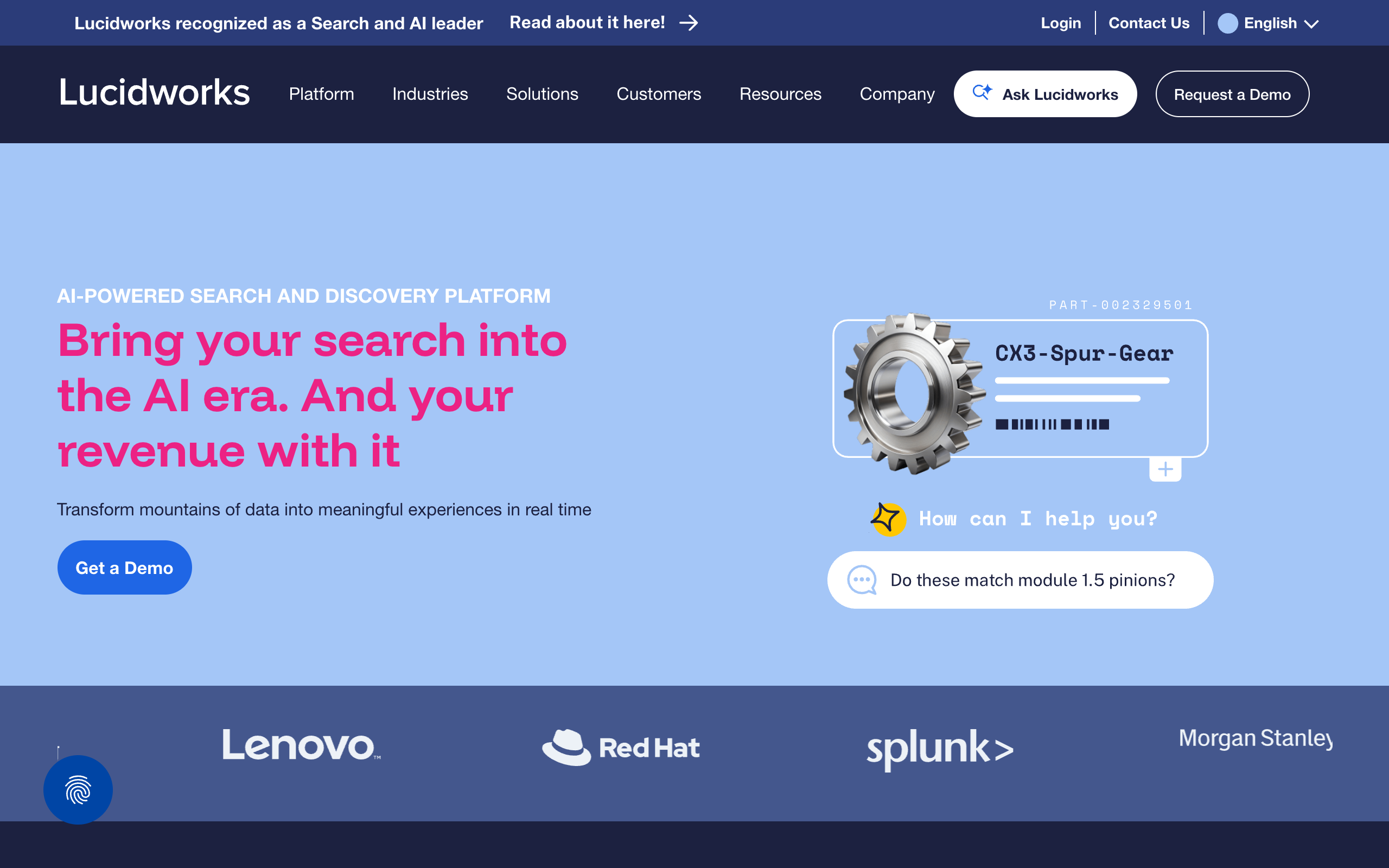
Lucidworks is the most like-for-like option here. Its platform pairs keyword and semantic retrieval in Neural Hybrid Search, and Commerce Studio gives merchandisers no-code ranking and promotion tools. It suits a buyer who wants to replace one suite with another.
Key features
- Neural Hybrid Search
- Commerce Studio for merchandisers
- Lucidworks AI for generative models and orchestration
Pros
- Like-for-like scope for commerce and B2B search
- 4.5 on G2 from 12 reviews
Cons
- No public price list was found
- Ask Lucidworks directly for its compliance documents
- More than a public docs site needs
Pricing: by quote. No public price list is available.
4.5/5·G2(12)Best forLarge commerce and B2B programs comparing Coveo against another suite.
7. Glean: best for internal workplace search
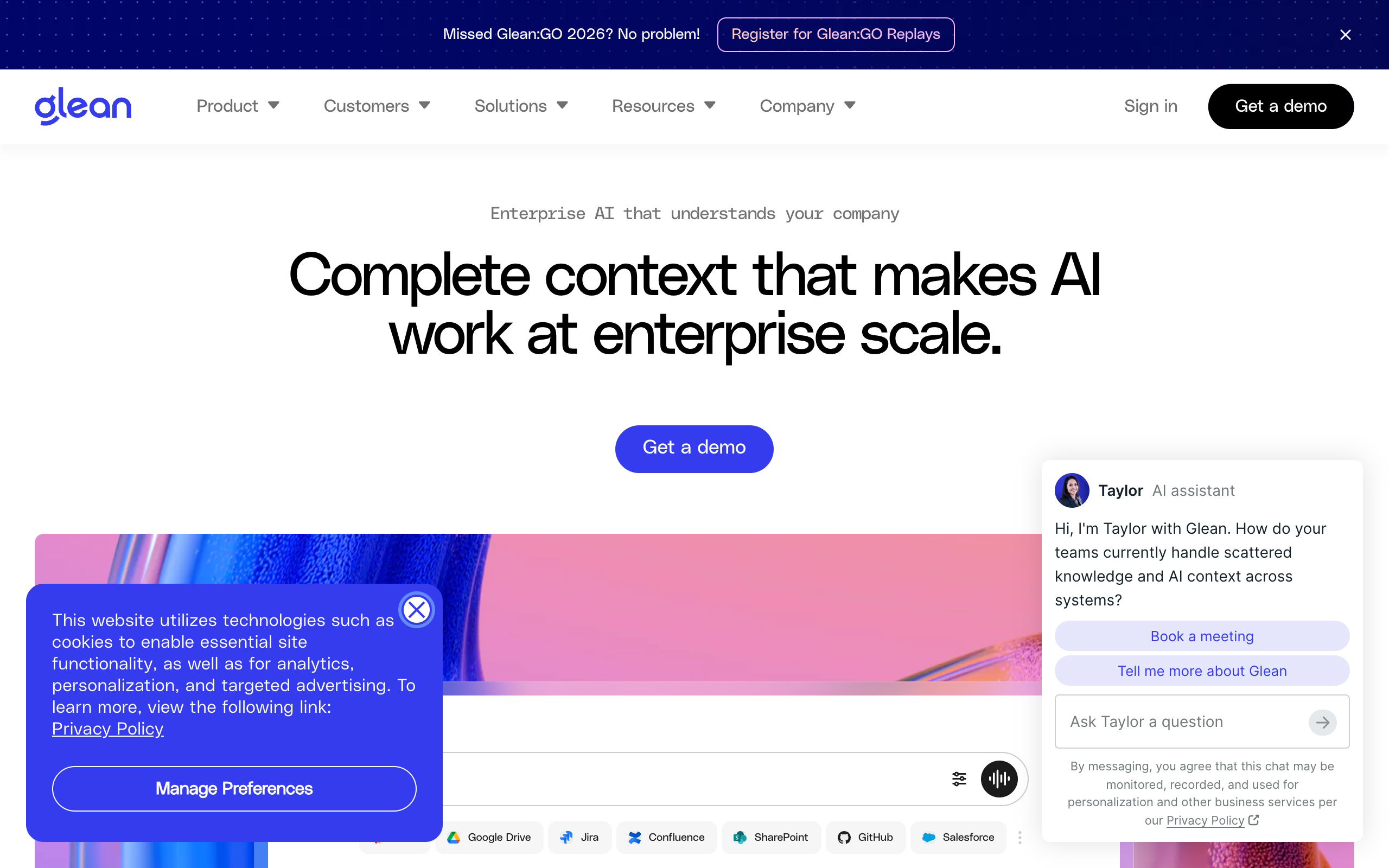
Glean searches internal company data across work apps such as Slack, Google Drive, Jira, Confluence, GitHub, and Salesforce. Glean says users see only what they are permitted to access. It competes with Coveo Workplace. Its site does not describe public website search.
Key features
- Search, an assistant, and agents over internal data
- Permission-aware results
- Connectors for common work apps
Pros
- Built around permissions on internal content
- Named customers include Booking.com and Zillow
Cons
- Not a public website or docs search tool
- Pricing page lists no prices, only a demo
Pricing: by demo. The pricing page lists no plans or prices.
G2 has no confirmed listing for Glean.
Best forCompanies that mainly need to find things inside the company.
How do the alternatives compare side by side?
| Tool | Output | Permissions on private content | AI answers | Published price | BAA |
|---|---|---|---|---|---|
| Coveo | Results and answers | Yes | Add-on | No | Yes, separate platform |
| Algolia | Results | Not the focus | Agent Studio, your LLM key | Yes | Not listed |
| SiteGPT | Chat answer | No | Included | Yes | Enterprise only |
| kapa.ai | Chat answer | Private sources on Growth | Included | Trial only | Not mentioned |
| AddSearch | Results and answers | Not the focus | From $700/mo billed annually | Yes | Not mentioned |
| Elastic | Results | You build it | Metered | Usage rates | Permitted on Cloud tiers |
| Lucidworks | Results | Not confirmed | Yes | No | Not confirmed |
| Glean | Internal answers | Yes | Included | No | Not confirmed |
"Not mentioned" and "not confirmed" mean the vendor's public pages did not state it on 2 November 2026. Ask the vendor before you rely on it.
Choose the suite only if you would use most of the left column.
Search suite
- Results pages with facets and personalization
- Private content with document-level permissions
- One platform across commerce, service, and workplace
- Quote-based pricing on annual contracts
Answer tool on public content
- Direct answers in a chat window
- Self-serve trial on your own content
- Published plans
- No results page, permissions, or merchandising
How do you choose a Coveo alternative?
Is private content in scope?
- If yes, across company apps for employees→Glean, or stay on Coveo
- If yes, for customers across private systems→Stay on Coveo
- If no, only public website and docs→Continue to the next question
What should a visitor receive?
- If a ranked results page→Algolia or AddSearch
- If a direct answer→SiteGPT, or kapa.ai for developer docs
- If both→AddSearch, or Algolia with SiteGPT beside it
Do you merchandise a catalog?
- If yes, at large scale→Coveo or Lucidworks
- If yes, at smaller scale→Algolia
- If no→A suite is probably more than you need
| Scenario | Best pick | Why |
|---|---|---|
| Public website with question-style traffic | SiteGPT | Direct answers from existing pages, with a published price. |
| Public docs for developers | kapa.ai | Retrieval API and MCP server for technical readers. |
| Website results page with a known budget | Algolia | Published rates and a free start. |
| Marketing site that wants results and answers | AddSearch | Answers appear beside regular results. |
| Large retail catalog | Coveo | Commerce search with merchandising and product discovery. |
| Suite-to-suite replacement in B2B commerce | Lucidworks | Closest scope, with merchandiser tooling. |
| Employees searching company apps | Glean | Permission-aware search across work tools. |
| Hospital with PHI in private content | Coveo | Dedicated HIPAA platform with a signed BAA. |
| Hospital with a public website chat | SiteGPT Enterprise | BAA available on Enterprise, with connectors and integrations off. |
| Engineering team that wants to build | Elastic | Full control, with a build project attached. |
Unsure which traffic you have? The guide on conversational search vs site search shows how to sort a sample of your own queries. Keeping your current box while you test is covered in how to add AI answers to your existing search box.
How do you move from Coveo to SiteGPT?
Moving from Coveo starts with your public website and docs content. You add that content to SiteGPT, test the answers against real visitor questions, and go live when the results hold up. Coveo can stay in place while you test.
The 7-day free trial is the simplest way to check the fit on your own content. It needs a credit card, and you can cancel before it ends.
For questions about your setup or timing, email Bhanu, SiteGPT's founder, at bhanu@sitegpt.ai.
Frequently asked questions
Basics
What is the best Coveo alternative? For a results page on a website, Algolia is the closest replacement with published rates. For accurate answers on public website and docs content, SiteGPT and kapa.ai do the job without a suite. For internal workplace search, Glean fits better. For commerce at scale, Coveo or Lucidworks remain the like-for-like options.
When should you stay on Coveo? Stay on Coveo for commerce search with merchandising and personalization, for workplace search with document-level permissions, and for service search across many private systems. Coveo also runs a dedicated HIPAA platform with an audit record. That is hard to replace if private content is in scope.
Pricing
How much does Coveo cost? Coveo does not publish prices. Its pricing page says to request pricing. Each pricing unit includes 100,000 queries a month, on annual or three-year subscriptions. Service and Website use entitlement-based pricing, Workplace uses seats, and Commerce is modular. Generative features are an add-on.
Is there a cheaper alternative to Coveo? Several tools publish lower entry prices. Coveo sells by quote, so there is no published Coveo price to compare against. SiteGPT starts at $39 a month billed yearly or $59 billed monthly. AddSearch keyword search starts at $119 a month billed annually. Algolia has a $0 start and bills by usage.
Comparisons
What is the difference between Coveo and Algolia? Both are search platforms with AI features. Algolia publishes usage rates, offers a free start, and is known for product search. Coveo sells by quote and covers commerce, service, website, and workplace search. Generative answering is an add-on, and Coveo runs a dedicated HIPAA platform.
Does SiteGPT replace Coveo? Only for part of the job. SiteGPT answers questions from public content in a chat window. It has no results page, facets, merchandising, or document-level permissions. It also takes no actions on live systems during a chat. If you need those, keep a search product.
Is Glean a Coveo alternative? For workplace search, yes. Glean focuses on internal company data across work apps, and users see only what they are permitted to access. Its site does not describe public website search, so it does not replace Coveo on a website.
Compliance
Does Coveo sign a BAA? Yes. Coveo's documentation says it acts as a Business Associate for customers with whom it signs a BAA, and that it offers a HIPAA-compliant environment on separate infrastructure. It passed its latest audit in 2025. Some features may be disabled on that platform, so confirm which ones with Coveo.
Does SiteGPT offer a BAA? Yes, on the Enterprise plan only. Starter, Growth, and Scale do not include one. A covered workspace blocks cloud file connectors, turns off chat integrations, and redacts conversation content 7 days after last activity by default. Training content must stay free of PHI.
Sources
- Coveo pricing, website search, and HIPAA platform documentation
- Algolia pricing, Ask AI documentation, Agent Studio, product compliance, and DPA
- SiteGPT pricing, security, HIPAA program, HIPAA workspace docs, DPA, subprocessors, and how answers work
- kapa.ai and kapa.ai pricing
- AddSearch and AddSearch pricing
- Elastic Cloud security, Serverless pricing, and Elastic Cloud differences
- Lucidworks platform documentation
- Glean and Glean pricing
- Pew Research Center, 22 July 2025