


AI lead qualification tools fall into two groups. Form-based chat tools such as SiteGPT and Landbot collect answers in the conversation, and a person reads them. Scoring and routing tools such as Chili Piper, Default, and Fin for Sales grade each lead and send it to a rep or a next step.
Most small teams need the first group. Teams with several reps and steady lead volume need the second. Buying the second too early adds a contract and a setup project you may not use.
iShort answer
Choose form-based qualification if one person or a small team reads every lead. SiteGPT suits that case when answers come from your content, and Landbot suits it when you want a scripted flow.
Choose scoring and routing if several reps share leads and speed depends on assignment. Fin for Sales, HubSpot's customer agent, Chili Piper, Default, and Qualified do that job at very different prices.
Key takeaways
| Tool | Approach | Best for | Entry price |
|---|---|---|---|
| SiteGPT | Form in chat | Small teams that read every lead | $39/mo billed yearly |
| Landbot | Scripted flow | Fixed question paths | €32/mo billed yearly |
| HubSpot | Script or AI categories | HubSpot CRM users | Free (rule-based) |
| Fin for Sales | AI playbook and routing | Intercom teams | $9.99 per qualified outcome |
| Chili Piper | Routing and booking | Multi-rep B2B teams | $15,000/year |
| Default | Enrichment, scoring, routing | RevOps-led teams | $12,000/year plus seats |
| Qualified | AI SDR on the website | Enterprise on Salesforce | Custom |
Each layer adds cost. Add one only when the layer below stops being enough.
Collect
Ask the questions in a form or a flow. A person reads the answers.
Grade
Compare the answers and outside data with your criteria, then label the lead.
Route
Send each lead to the right rep, calendar, or self-serve path automatically.
What is AI lead qualification?
AI lead qualification uses software to collect or assess the information that shows whether a lead is worth a salesperson's time. Some tools ask questions in a chat and record the answers. Others score the lead, enrich it with outside data, and route it.
Vendors use the same phrase for both. Check what "qualify" means on each pricing page.
A form that collects a budget is qualification. So is an agent that scores a lead and books a rep. The two have very different costs.
How does form-based qualification compare with scoring and routing?
Form-based qualification collects answers and leaves the decision to a person. Scoring and routing make that decision by rule or model. The table shows where each approach holds up.
| Test | Form-based in chat | Scoring and routing |
|---|---|---|
| Who decides | A person reads the lead | Rules or AI, against your criteria |
| Setup | Hours | Days to weeks, with CRM work |
| Data needed | The visitor's answers | Answers, CRM, and often enrichment |
| Works at low volume | Yes | Rules have little data to learn from |
| Risk | A slow human review | A good lead routed to the wrong place |
| Typical cost | Under $100 a month | $12,000 a year and up |
The risk column matters. A form cannot reject anyone by mistake, because a person sees every lead. A scoring rule can drop a good buyer quietly, so review the rejected leads each month.
Which lead qualification tools collect answers in chat?
SiteGPT: form-based qualification from your own content
SiteGPT answers questions from your content, then shows a lead form inside the conversation. The lead collection guide lists three triggers: when the user shows interest, when the AI is unable to answer, and after N messages.
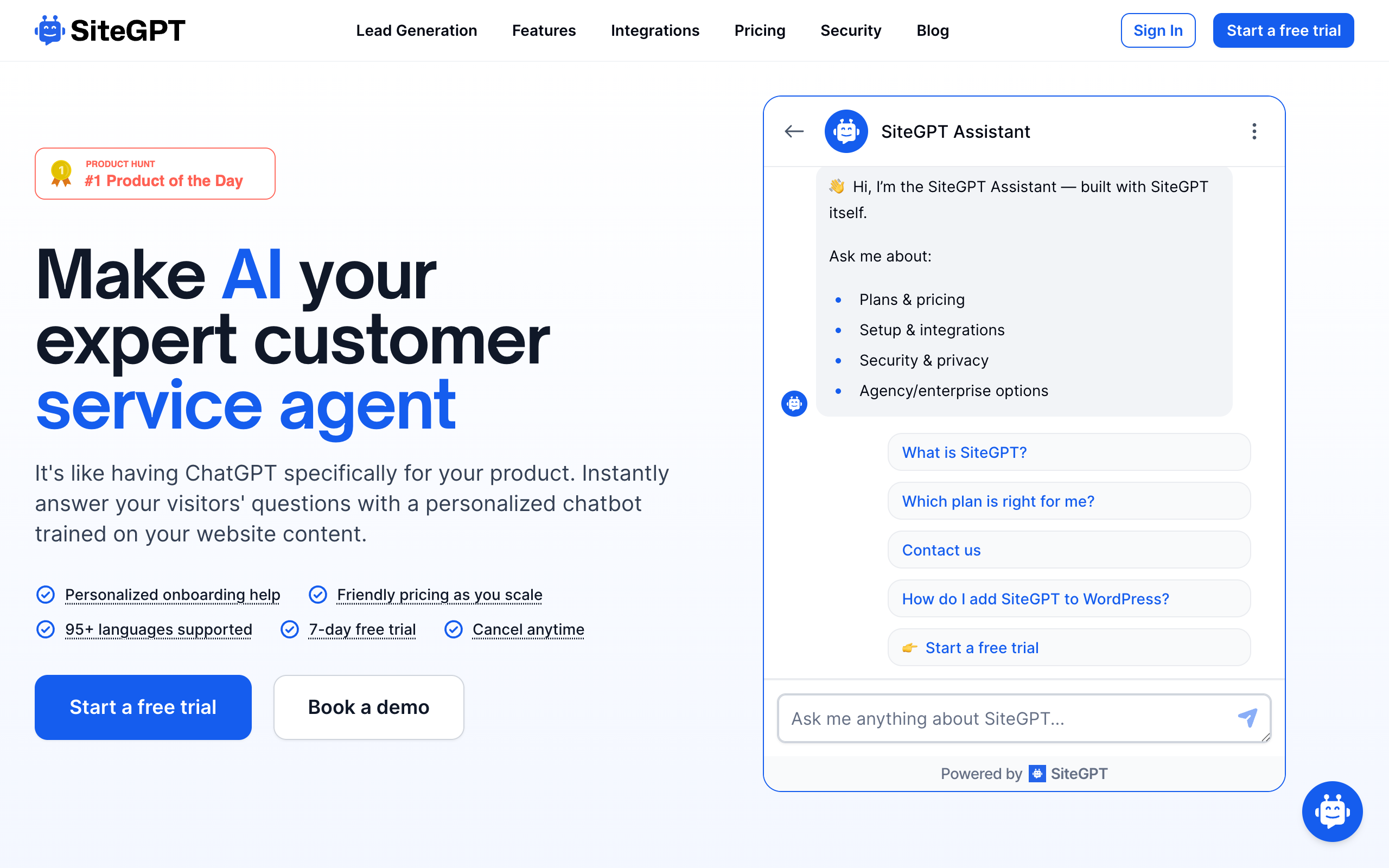
Qualification here means the fields you choose. Email is always collected, and Name and Phone are optional. The Custom template adds five field types: Text, Email, Phone, Text Area, and Select Dropdown. Use them to ask for team size or timeline.
SiteGPT does not score leads, route them, or filter who gets forwarded. It has no outbound. You read each lead in the Leads Dashboard, where you can star, archive, and export them to CSV.
Pros
- Form appears after the visitor has had an answer
- Three triggers and industry templates on any plan
- Email alerts and CSV export on any plan
Cons
- No scoring or routing
- Webhook needs Scale, and it does not retry
- No built-in CRM integration
Best forSmall teams where a person reads every lead and answers come from your content.
Landbot: scripted qualification flows
Landbot is a visual builder where you script each question and branch. Its lead scoring template qualifies and segments leads based on their answers.
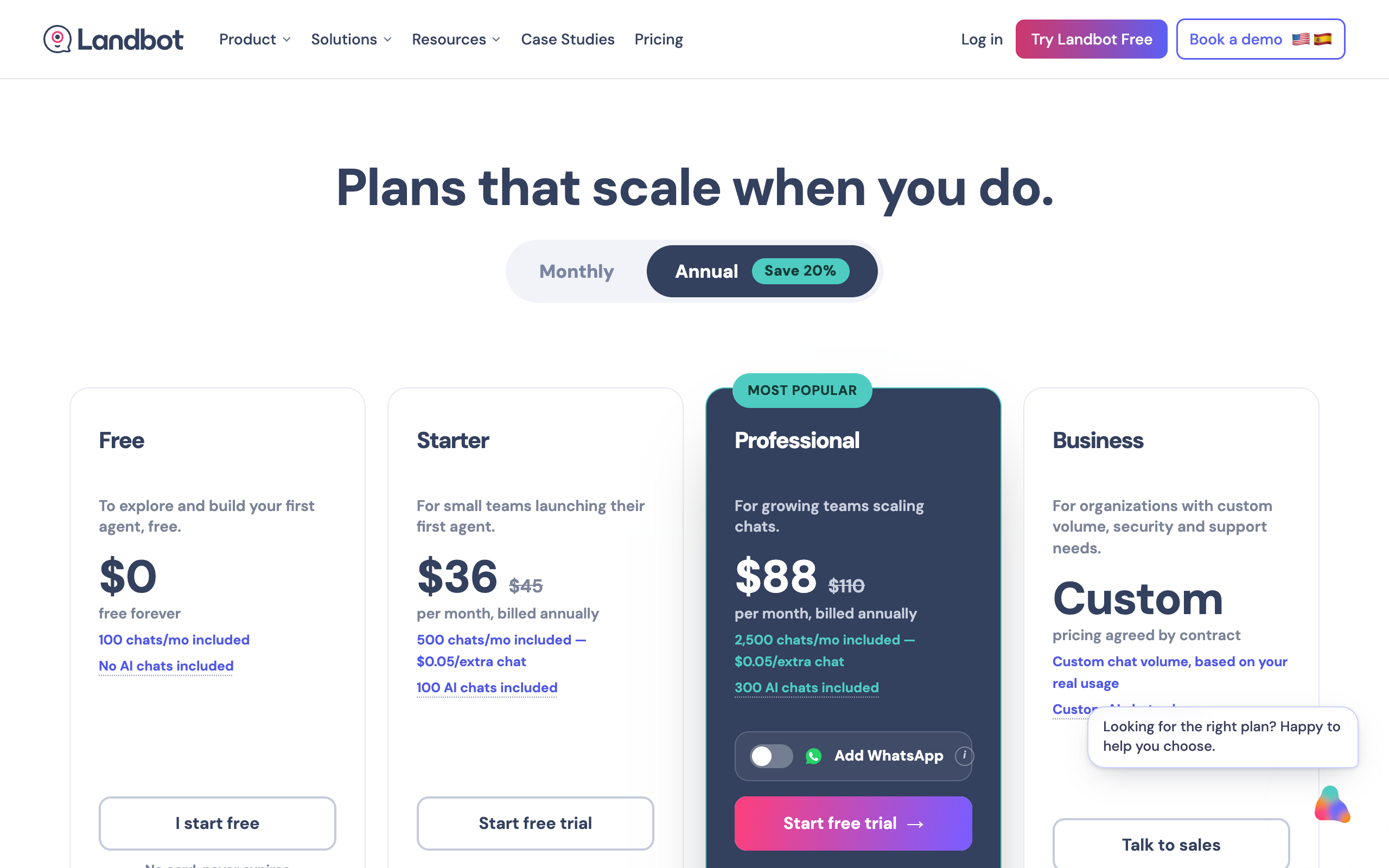
Because the path is scripted, Landbot sits between the two groups. You write the rules yourself and the flow applies them. The HubSpot block creates and updates records, and pricing puts HubSpot on Professional at €80 a month billed yearly.
Pros
- Full control over each branch
- In-chat Calendly booking on web
- Free plan for testing
Cons
- Rules are written and maintained by hand
- Visitors who go off script need AI steps or a fallback path
- AI chats are metered
Best forTeams with a fixed set of questions and a clear scoring rule.
Which tools score and route leads?
HubSpot: categories inside the CRM
HubSpot's customer agent checks a lead against criteria built from CRM property filters. It sorts leads into Qualified, Partially qualified, and Not qualified, and you set a routing rule for each one, such as booking a meeting.
The agent needs a Professional or Enterprise hub, and HubSpot Credits to run on channels. The Marketing Hub pricing page lists Professional at $800 a month with an annual commitment. A free rule-based chatbot also asks questions and saves answers to contact properties.
4.4/5·G2(16,040)Best forTeams already paying for a HubSpot Professional hub.
Fin for Sales: playbook qualification on Intercom
Fin for Sales asks the questions an SDR would ask, applies your playbook, and enriches the conversation with CRM data and research. It then sends the lead to a rep, a trial, or a self-serve flow.
The Fin pricing page charges $9.99 per qualification outcome and $0.99 for disqualifications and self-serve routings. You need a current Intercom plan.
4.5/5·G2(3,952)Best forIntercom teams that want AI to qualify and pay per result.
Chili Piper: routing and booking for sales teams
Chili Piper routes form and chat leads to the right rep and books the meeting. Form Concierge handles form leads, and Distro routes leads and Salesforce objects to owners.
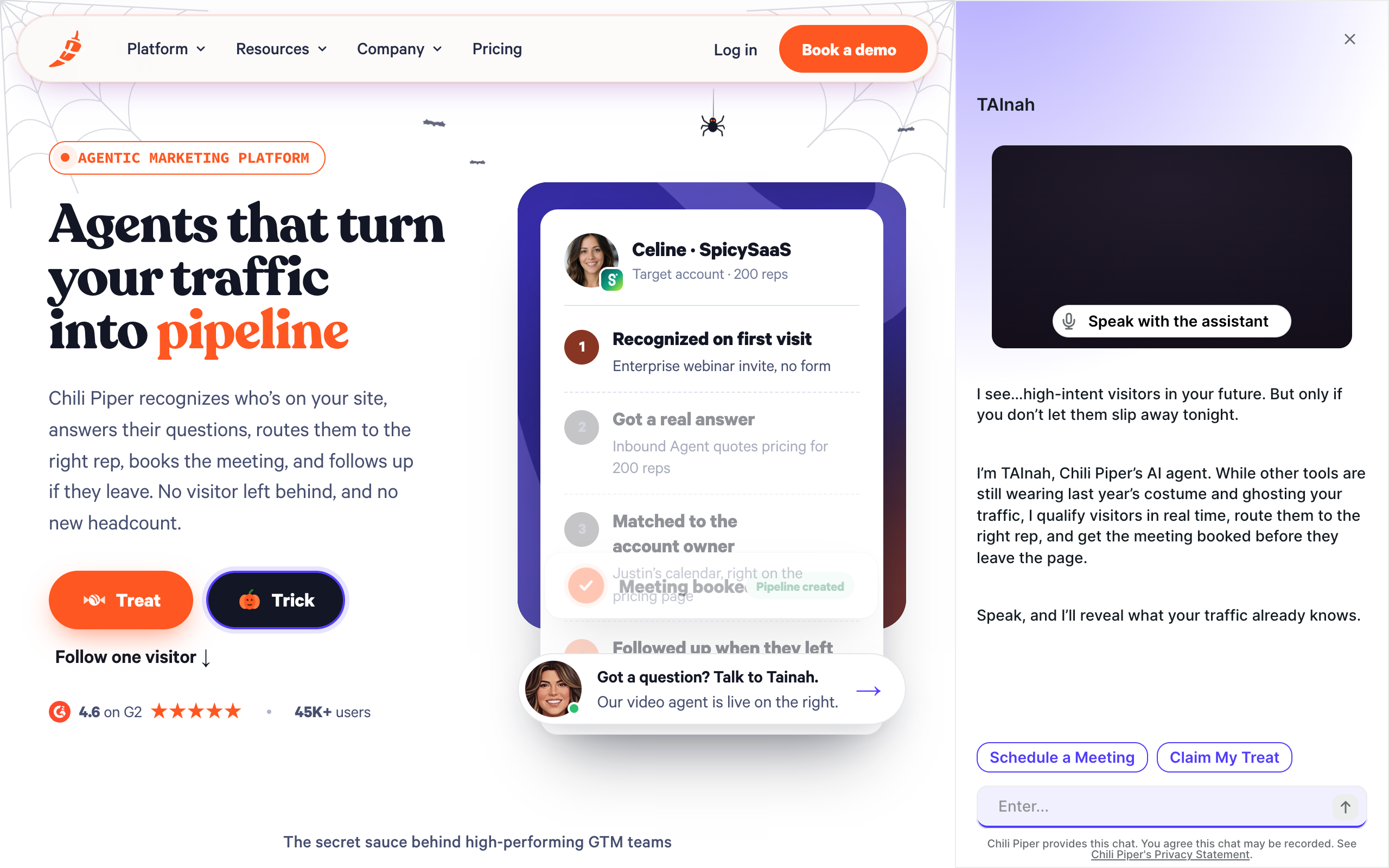
The pricing page lists Growth at $15,000 a year with 15 seats, and Scale at $42,000 a year with 30 seats. All plans bill annually.
4.6/5·G2(741)Best forB2B sales teams of 15 or more with complex assignment rules.
Default: enrichment, scoring, and routing in one workflow
Default enriches a form submission, scores the lead against an ideal customer profile, and routes it across territories and queues. It connects to Salesforce and HubSpot and keeps a log of which rule made each assignment.
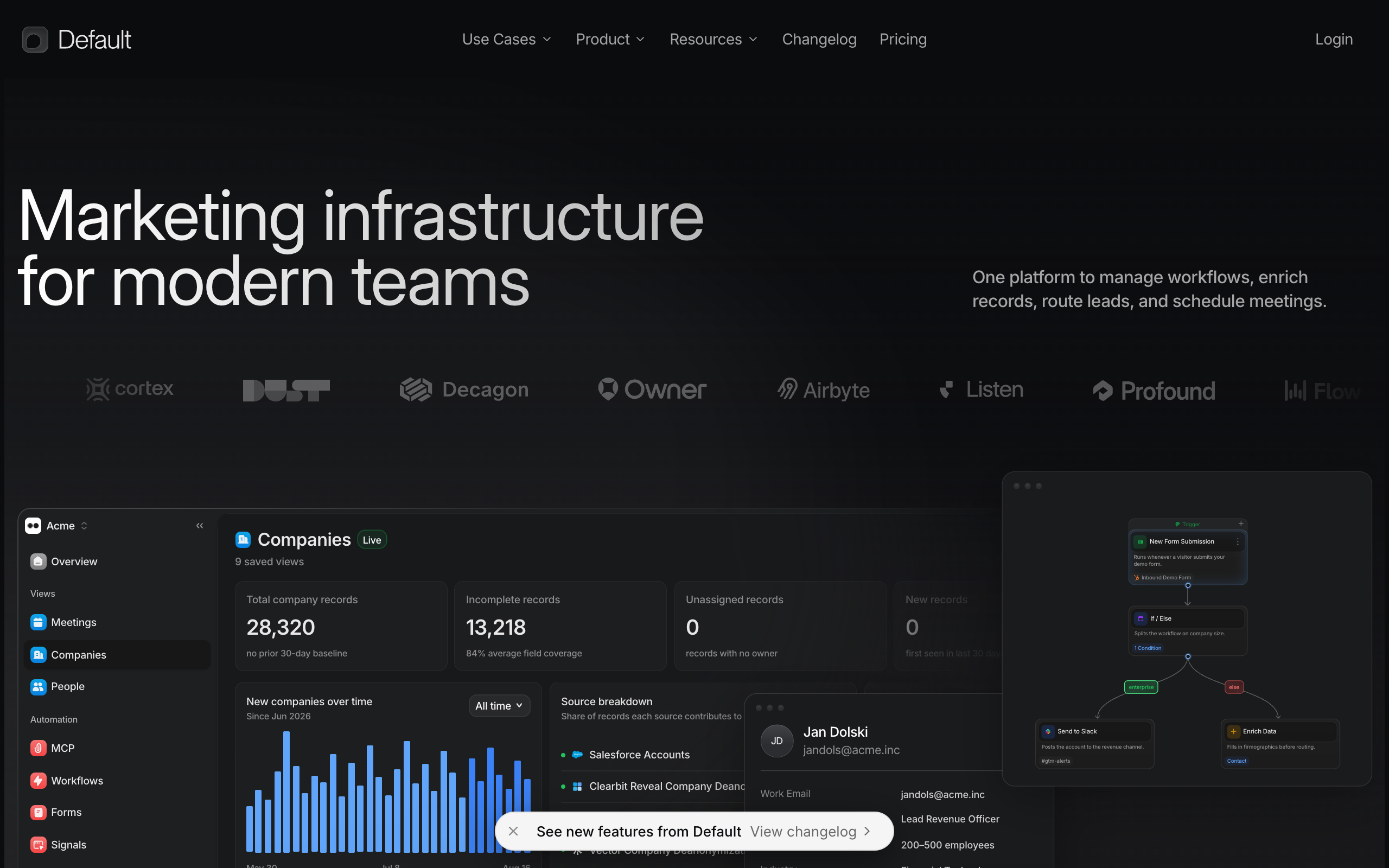
Its pricing page lists Growth at $12,000 a year, with Routing and Scheduling seats at $540 per user a year. Ten seats bring the total to $17,400 a year.
4.6/5·G2(62)Best forRevenue operations teams that want form qualification and routing in one audit trail.
Qualified: an AI SDR on the website
Qualified sells Piper, an AI SDR that meets visitors by chat, voice, or video. Its site says AI SDRs qualify using criteria such as company size, intent signals, or CRM data, and it lists routing and alerts as a feature. Salesforce completed its acquisition of Qualified on 1 April 2026.
Pricing is custom, so you need a demo for a quote.
4.9/5·G2(1,575)Best forEnterprise teams on Salesforce with high website traffic.
How much do lead qualification tools cost?
Published costs run from free to $42,000 a year. Yearly figures make the gap clear.
SiteGPT's figure is Starter billed yearly. HubSpot's is Marketing Hub Professional with an annual commitment, before credits and the $3,000 onboarding fee. Default's excludes seats.
Fin for Sales has no bar because it bills per outcome. At 50 qualified leads a month it costs about $500 a month, or $6,000 a year, before seats.
$14,532 a year separates SiteGPT Starter from Chili Piper Growth
$468 against $15,000 a year. That gap pays for a lot of human lead review. Buy routing only when you have reps to route to.
What questions should a lead qualification chatbot ask?
Ask only what a person would act on. The usual set is the problem, the size or volume, the timeline, and the current tool. A question that changes nothing your team does next should go.
Keep the form short and let the chatbot answer first. On SiteGPT, a dropdown on the Custom template gives clean data for team size or budget range, and the field name appears in exports and webhooks.
| Field | Why ask it | Good format |
|---|---|---|
| Work email | Needed to reply, and always collected on SiteGPT | |
| What are you trying to solve? | Tells the rep how to open | Text Area |
| Team size or monthly volume | Sets the plan or fit | Select Dropdown |
| When do you want to start? | Sorts urgent leads | Select Dropdown |
More examples, including question order, are in the chatbot templates library. The wider funnel is in the conversational marketing playbook.
Which approach should you choose?
| Scenario | Best pick | Why |
|---|---|---|
| One person reads every lead | SiteGPT | Collects answers in chat, with alerts by email on any plan. |
| Fixed questions with a clear score | Landbot | You script the branches and the formula. |
| HubSpot Professional already in place | HubSpot | Customer agent categories sit on CRM properties. |
| You run Intercom | Fin for Sales | Playbook qualification billed per outcome. |
| 15 or more reps share leads | Chili Piper | Routing and booking across a team. |
| RevOps wants one audit trail | Default | Enrichment, scoring, and routing with logs. |
| Enterprise on Salesforce | Qualified | Piper across chat, voice, and video. |
How many people work inbound leads?
- If One to five, and a person can read every lead→SiteGPT or Landbot
- If Several reps on Intercom or HubSpot→Fin for Sales or HubSpot
- If 15 or more reps with assignment rules→Chili Piper or Default
Routing buys speed once several people share leads. Workato's test found companies with a lead routing tool responded in 3 hours and 32 minutes on average, against nearly 13 hours without one. For a team of two, an email alert and a shared rule do the same job, as covered in speed to lead.
If you are still choosing a chatbot, see best AI chatbots for lead generation. For the booking step, see best AI appointment setters.
FAQ
What is AI lead qualification?
AI lead qualification uses software to collect or assess the information that shows whether a lead is worth a salesperson's time.
Some tools ask questions in a chat and record the answers. Others score the lead against set criteria, enrich it with outside data, and route it to a rep.
What is the difference between form-based qualification and lead scoring?
Form-based qualification collects answers from the visitor, and a person decides what to do with them. Lead scoring grades the lead automatically against criteria. Routing then sends the lead to a rep or a next step based on that grade.
Form-based tools are simpler and cheaper. Scoring and routing need more data and setup.
Does SiteGPT score or route leads?
No. SiteGPT collects details through lead forms inside the conversation, including custom fields and dropdowns on the Custom template.
It does not score leads, route them to reps, or forward only qualified prospects. Your team reviews each lead in the dashboard, by email, or through a webhook on Scale and above.
What questions should a lead qualification chatbot ask?
Ask only what a person would act on: the problem, the size or volume, the timeline, and the current tool.
Each question should change what your team does next. Four fields is a sensible ceiling for a form inside a chat.
Which lead qualification tool is cheapest?
As of 2 November 2026, prices start at free for HubSpot's rule-based chatbot. SiteGPT starts at $39 a month billed yearly, and Landbot at €32 a month billed yearly.
Fin for Sales charges $9.99 for each qualified outcome. Default starts at $12,000 a year and Chili Piper at $15,000 a year.
When do you need lead routing software?
You need routing when more than one rep or team shares inbound leads and a wrong assignment costs time. A solo founder or a small team with one inbox can skip it.
Workato found companies with a lead routing tool responded in 3 hours and 32 minutes on average, against nearly 13 hours without one.
Can a chatbot replace a sales development rep?
For first-pass questions on inbound leads, it can take much of the load. A person is still needed for judgment calls, negotiation, and any deal where the answer depends on context.
Plan the handoff before you plan the questions.
Sources
- SiteGPT: collect leads, manage leads, send leads to other tools, and pricing.
- Landbot: lead scoring template, HubSpot block, and pricing.
- HubSpot: customer agent qualification, bot actions, and pricing.
- Fin: Fin for Sales explained and pricing.
- Chili Piper: homepage and pricing.
- Default: homepage and pricing.
- Qualified: AI SDR page and pricing. Salesforce: FY27 Q1 highlights.
- Lead response time study, Workato. Workato sells automation software, so read it as vendor research.